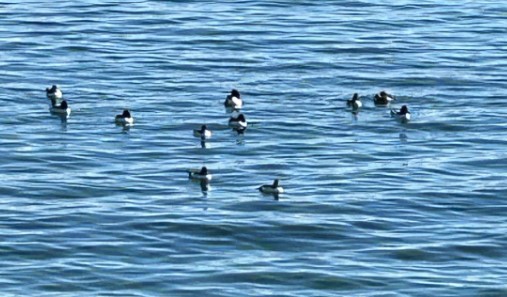
```html Cove Birds • MurdenCove.com

Cove Birds

A personal field guide to birds observed around Murden Cove and the nearby Bainbridge Island shoreline.

Canada Goose

Branta canadensis
Waterfowl Family flocks Shoreline grazer Common Resident
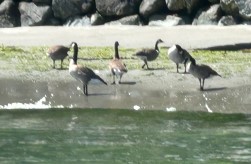
Canada Geese at Murden Cove

Quick facts

ID keys Large gray-brown goose with a long black neck, black head, and a distinctive white cheek patch. Their familiar honking calls often announce them before they come into view.
Size One of North America’s largest waterfowl, generally measuring about 30–43 inches long with a broad wingspan.
Habitat Shorelines, estuaries, wetlands, lakes, lawns, agricultural areas, and protected coves.
Diet Primarily grasses, aquatic plants, sedges, berries, seeds, and agricultural grains.
Behavior Highly social and often seen in family groups. During nesting season, adults can be strongly territorial and devoted defenders of their goslings.
Flight pattern Migrating flocks often use a V-formation, helping birds conserve energy by benefiting from air currents created by the birds ahead.
Common Merganser

Mergus merganser
Diving duck Fish-eater Winter visitor Seasonal Visitor
Common Merganser

Quick facts

ID keys Long, narrow red bill; clean, sleek profile; often rides low on the water.
Male vs. female Males are bright white with dark green heads; females are gray with rusty heads and crests.
Habitat Bays, inlets, protected saltwater, large lakes, and rivers.
Behavior Efficient diver—often resurfaces far from the place where it disappeared.
Mariner’s-eye moment When they begin “submarine hunting,” it can look like a tiny torpedo patrol moving through the cove.

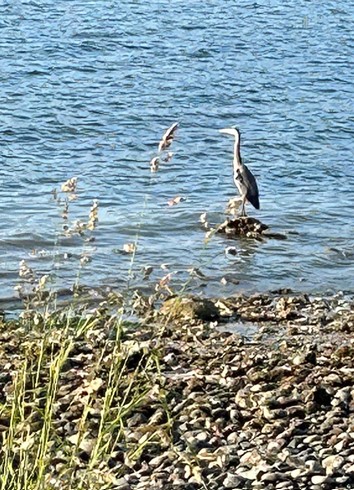
Great Blue Heron

Ardea herodias
Wader Shoreline hunter Year-round resident Common Resident
Great Blue Heron

Quick facts

ID keys Tall gray-blue heron, dagger-shaped bill, and a slow, deliberate stalk.
Size About four feet tall, with a wingspan that can exceed six feet.
Habitat Shorelines, tidal flats, docks, marinas, wetlands, and quiet coves.
Feeding An ambush predator that stands nearly motionless before striking at fish and other prey.
Flight ID Flies with its neck folded into an “S” shape and uses slow, powerful wingbeats.

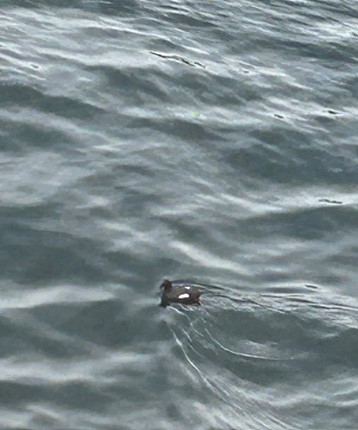
Black Guillemot

Cepphus grylle
Seabird Diver Coastal Rare Observation
Black Guillemot

Quick facts

ID keys Dark body with bright white wing patches, seasonal plumage variation, and red legs and feet.
Habitat Nearshore waters, rocky coasts, islands, and protected marine areas.
Behavior Dives for fish and marine invertebrates, often remaining relatively close to shore.
Vibe One of those “wait—what is that?” birds that feels like unlocking a rare sighting.
Spotting tip Look for quick, low flights just above the water between dives.

Pelagic Cormorant

Urile pelagicus
Seabird Cliff and rock perch Underwater hunter Occasional Sighting
Pelagic Cormorant

Quick facts

ID keys Slender cormorant with a long neck, narrow profile, and sleek appearance.
Habitat Rocky shorelines, islands, offshore rocks, and coastal areas throughout Puget Sound.
Behavior Dives and swims underwater for fish, then often perches nearby to rest or dry.
Silhouette Classic upright cormorant posture with a slight cobra-like curve to the neck.
Tell If it is perched on a rock looking narrow, dark, and aerodynamic, you may be close.

Osprey

Pandion haliaetus
Raptor Fish hunter Shoreline visitor Seasonal Visitor
Osprey

Quick facts

ID keys Large raptor with a white underside, dark upperparts, and a bold dark eye stripe.
Flight ID Often shows a characteristic “M” shape in flight, created by its long, angled wings.
Habitat Coves, bays, lakes, rivers, and shorelines where fish are readily available.
Behavior A specialized fish hunter that may hover briefly before plunging feet-first into the water.
Moment Easy to mistake for an eagle at first glance, until the wing shape and fishing style give it away.

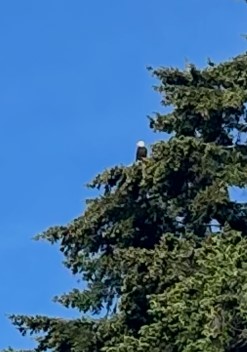
Bald Eagle

Haliaeetus leucocephalus
Raptor Apex shoreline predator Year-round resident Common Resident
Bald Eagle

Quick facts

ID keys Adult birds have a white head and tail, a massive yellow bill, and broad, powerful wings.
Habitat Shorelines and waterways with tall trees available for nesting and observation.
Behavior Soars, perches, scavenges, and opportunistically hunts fish, birds, and other prey.
Sound High, chattering calls—not the dramatic hawk scream often substituted in movies and television.
Moment Everything else seems to go quiet when one cruises low over the shoreline.

Bufflehead

Bucephala albeola
Small diving duck Winter visitor Fast and buoyant Seasonal Visitor
Bufflehead

Quick facts

ID keys Males have a bold white head patch against a dark head and a compact, rounded profile.
Habitat Protected bays and coves, often relatively close to shore.
Behavior Makes quick dives for insects, crustaceans, and other small aquatic prey.
Movement Often travels in small groups and resurfaces with a cork-like bounce.
Spotting tip Watch for synchronized dips that resemble tiny periscopes disappearing beneath the water.
```